Maintaining a clean and safe swimming pool requires regular monitoring of the water chemistry.
Chlorine is the primary sanitizer used to kill bacteria, viruses, and algae that can make the water unsafe.
Understanding how to add the right amount of chlorine and when to do it is essential for any pool owner.
This guide explains the different types of chlorine, the correct dosing methods, and how to keep your water balanced throughout the swimming season.
What Does Chlorine Do in a Pool?
Chlorine works by breaking down into hypochlorous acid and hypochlorite ions when added to water.
These compounds attack the cell walls of microorganisms, destroying them and preventing illness.
Chlorine also helps control algae growth and breaks down organic contaminants such as sweat, oils, and urine.
Without adequate chlorine, pool water quickly becomes cloudy and unsafe.
To measure the effectiveness of chlorine, pool owners monitor three levels: free chlorine (the active sanitizer), combined chlorine (chloramines that have bonded to contaminants), and total chlorine (the sum of both).
A strong chlorine smell near the pool indicates high combined chlorine, not a clean pool.
The goal is to keep free chlorine between 1 and 3 parts per million (ppm) and combined chlorine as close to zero as possible.
Types of Pool Chlorine
Different forms of chlorine suit different maintenance needs. The most common types for residential pools are liquid chlorine, trichlor tablets, dichlor granules, and calcium hypochlorite shock. Each has its own advantages and drawbacks.
Liquid Chlorine
Liquid chlorine, also known as sodium hypochlorite, is an unstabilized sanitizer that does not contain cyanuric acid (CYA).
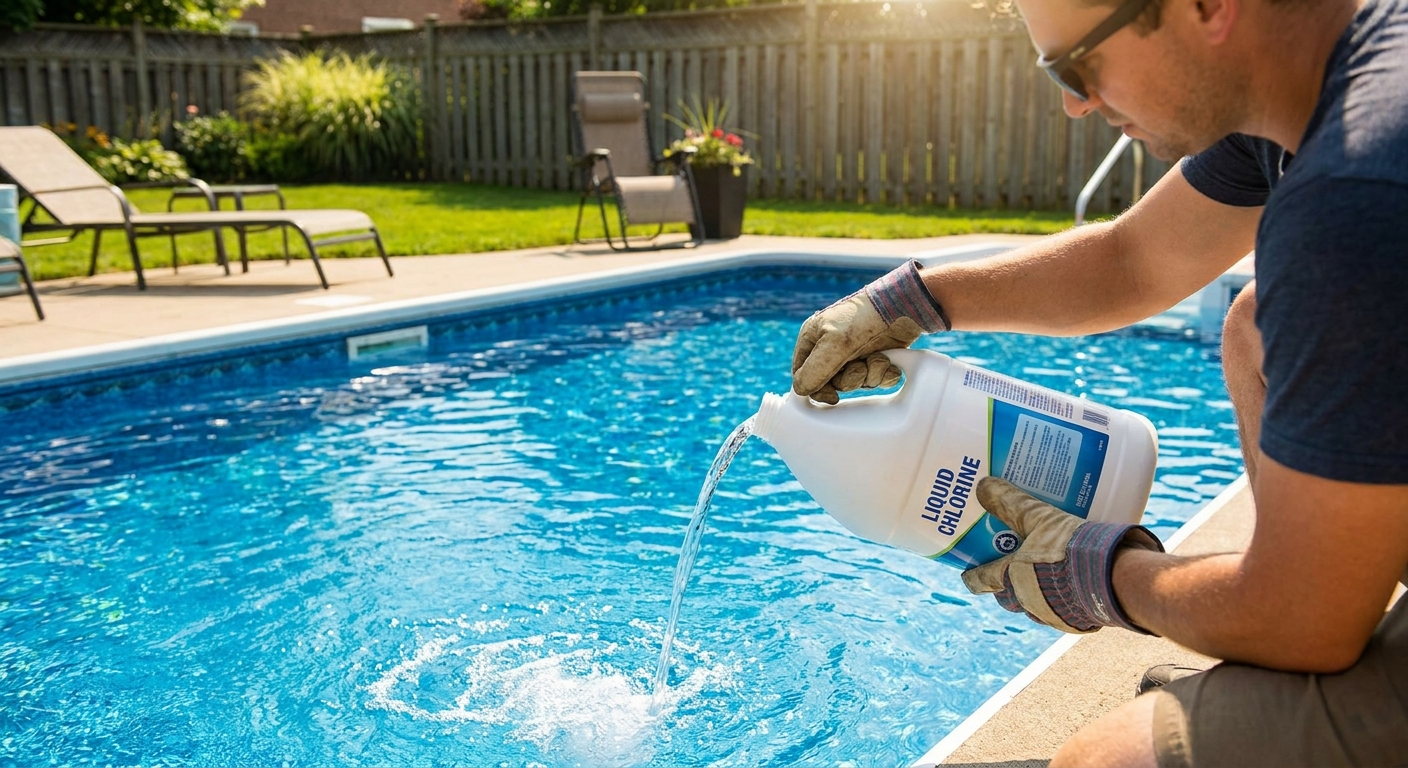
It is inexpensive and easy to apply—simply pour slowly in front of a return jet.
However, it degrades quickly in sunlight and has a short shelf life.
For outdoor pools, users must add a separate stabilizer to protect the chlorine from UV rays.
Trichlor Tablets
Trichlor is a stabilized form of chlorine that includes cyanuric acid to help the chlorine last longer in sunlight.
It comes in 1-inch and 3-inch tablets that dissolve slowly.
Tablets are convenient for general upkeep but can contribute to overstabilization if used exclusively, as CYA accumulates over time.
High CYA levels reduce chlorine’s effectiveness and may require partial water replacement.
Dichlor Granules
Dichlor is a stabilized granular product often used in smaller pools, hot tubs, and spas.
It dissolves quickly and has a nearly neutral pH, so it does not significantly affect water balance.
Like trichlor, it adds CYA to the water, so monitoring stabilizer levels is important.
Calcium Hypochlorite (Cal Hypo)
This nonstabilized granular product is typically used as pool shock. It raises chlorine levels rapidly and is effective for treating algae or after heavy use. Cal Hypo should be dissolved in water before adding to the pool to avoid staining.
How Much Chlorine to Add
The amount of chlorine needed depends on your pool size and current free chlorine level.
A general rule is to add one 3-inch tablet per 5,000 gallons of water per week for maintenance.
For liquid chlorine, using a 10% strength solution, about 13 fluid ounces raise free chlorine by 1 ppm per 10,000 gallons.
Always test the water before adding any chemicals.
Use a test kit or strips to measure free chlorine, combined chlorine, pH, and cyanuric acid.
If free chlorine is below 1 ppm, add enough product to bring it up to the target range.
Follow the manufacturer’s dosage instructions on the package, as concentrations vary between brands.
When and How to Add Chlorine
Chlorine should be added regularly—every few days during swim season—to maintain proper levels.
It is best to add chlorine after sunset because UV rays from sunlight degrade unstabilized forms rapidly.
For outdoor pools using stabilized chlorine, evening application still allows the chlorine to work overnight before the sun returns.
- Pool float: Fill a floating dispenser with tablets and let it slowly release chlorine as it moves across the surface.
- Automatic chlorinator: Installed in the filtration system, this device meters chlorine consistently.
- Direct pouring: For liquid chlorine, pour slowly in front of a return jet in the deep end. Do not pour near pool walls or vinyl liners to avoid bleaching.
- Broadcasting granules: For powdered shock, sprinkle evenly over the water surface, then brush if needed.
Never place chlorine tablets directly into the skimmer basket or onto the pool floor. The high concentration can damage pump components and cause staining.
Understanding Stabilization and Overstabilization
Cyanuric acid acts as a sunscreen for chlorine, preventing rapid breakdown by sunlight.
However, when using stabilized products like trichlor and dichlor, CYA builds up over time.
A CYA level above 50–80 ppm can make chlorine less effective, even if free chlorine readings appear normal. This condition is called overstabilization.
To fix it, pool owners must partially drain and refill the pool with fresh water.
Regular testing of CYA levels is essential, especially if you use tablets or dichlor granules as your primary chlorine source.
For those who prefer to avoid stabilizer buildup, liquid chlorine or calcium hypochlorite are good choices because they add no CYA.
However, you will need to add a separate stabilizer product for outdoor pools.
One reliable method is to combine unstabilized liquid chlorine with a CYA increaser to maintain the right balance.
When choosing a chlorine for swimming pool, consider both your pool’s exposure to sunlight and your willingness to test and adjust stabilizer levels regularly.
Safety Precautions When Handling Chlorine
All chlorine products are chemicals that require careful handling. Always read and follow the label instructions. Never mix different types of chlorine together, and never combine chlorine with other pool chemicals. Doing so can cause violent reactions, leading to fire or toxic gas release.
Store chlorine in a cool, dry, well-ventilated area, away from direct sunlight and away from any other chemicals, including acids and algaecides. Keep containers tightly sealed when not in use.
Wear gloves and safety goggles when handling concentrated forms, especially granular shock. Avoid breathing dust or fumes.
After adding chlorine, wait at least the time specified on the product label before swimming. For shock treatments, this is often 8–24 hours.
Test the water again to confirm that free chlorine has dropped to a safe level (below 3 ppm) before allowing anyone to enter the pool.
Maintaining Consistent Chlorine Levels
Consistency is key to a clean pool.
Test the water at least twice a week during peak season, and more often during hot weather or after heavy rain.
Keep a log of test results so you can spot trends and adjust your routine.
In addition to chlorine, monitor pH (ideal range 7.2–7.8), total alkalinity, and cyanuric acid.
Proper pH ensures that chlorine works effectively and prevents eye and skin irritation.
If you use an automatic chlorinator, check its operation regularly to ensure tablets are dissolving correctly.
For saltwater pools, the chlorinator cell generates chlorine from salt, but you still need to test and supplement if levels drop.
No matter the system, routine attention to water chemistry will keep your pool inviting and safe all season.